
Walk into a lab in the 1970s and, at first glance, it wouldn’t feel entirely unfamiliar. There would be microscopes lined along the benches, glass pipettes drying in racks, centrifuges rattling away in the corner and scientists carefully recording observations in notebooks that had almost certainly survived several chemical spills.
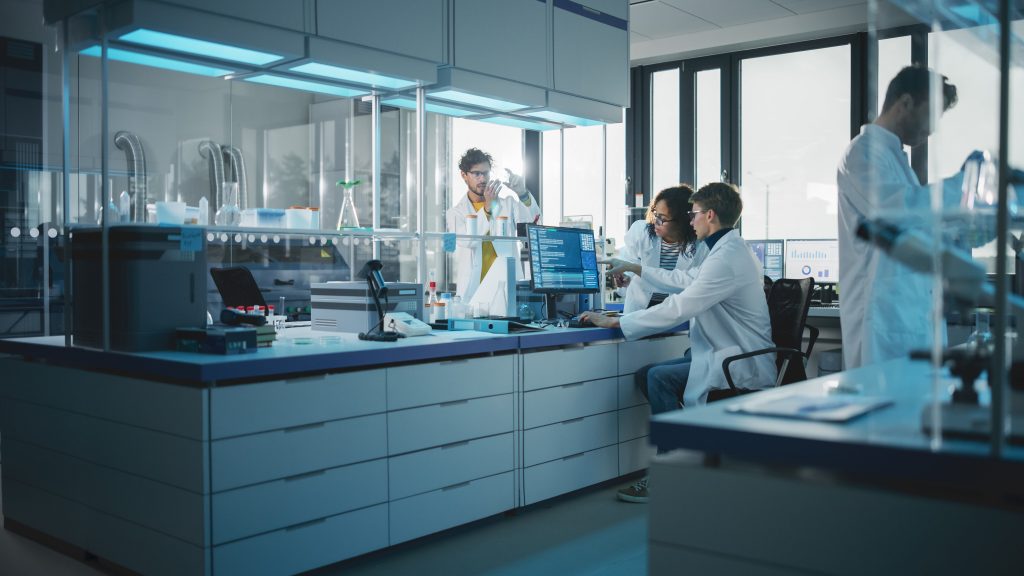
Visit a laboratory today and it’s a different world. Instruments generate millions of data points before you’ve had chance to finish your morning coffee. Genome sequencing that once took years now happens in days. Liquid handling robots quietly work through repetitive tasks with extraordinary precision, while artificial intelligence is beginning to uncover patterns that might have taken researchers weeks, or even months, to spot.
Science has advanced at a remarkable pace. However, the way many laboratories manage their information hasn’t always kept up. Despite advances in instrumentation and automation, many organisations still struggle to create truly integrated laboratory systems that connect data, workflows and people.
Scratch beneath the surface and you will often uncover a fascinating ecosystem of spreadsheets, handwritten notebooks, shared network drives, emails, printed worksheets and the occasional laminated instruction sheet that nobody remembers creating but nobody dares throw away. Every laboratory seems to have developed its own collection of workarounds over the years. They solved a problem at the time, became part of everyday life and quietly evolved into permanent fixtures.
Ask where the definitive record for where a sample lives and the answer is rarely straightforward. One colleague opens a spreadsheet. Another heads straight for the instrument software. Someone else disappears into a filing cabinet ‘just to check something’. Individually, each method makes perfect sense. Collectively, they begin to resemble an elaborate treasure hunt.
The irony is hard to ignore. Laboratories routinely trust instruments capable of measuring substances at parts-per-billion concentrations, yet many still spend an astonishing amount of time trying to answer surprisingly ordinary questions. Where is this sample? Has it already been tested? Which result is the latest? Who changed that value?
None of these are scientific problems. They are information problems.
When spreadsheets quietly became laboratory management systems
In fact, spreadsheets were brilliant. They were quick to create, familiar to almost everyone and flexible enough to adapt as laboratories expanded. Without lengthy software projects or expensive infrastructure, they gave researchers a practical way to organise growing amounts of information.
The trouble was that laboratories kept asking them to do more.
What began as a simple register for recording samples gradually evolved into something altogether more ambitious. Before long, the same workbook was tracking freezer locations, scheduling testing, recording quality control, monitoring stock levels, producing reports and keeping tabs on projects that had long outgrown its capabilities. It wasn’t really a spreadsheet anymore. It had quietly become the laboratory’s information management system, just without any of the safeguards you would expect from one.
Spreadsheets work wonderfully until they don’t. Someone duplicates a sample instead of creating a new record. A formula is accidentally overwritten. A colleague creates their own version ‘just for now’. Nobody can quite remember which copy is current, but everyone is fairly certain theirs is the correct one.
The consequences rarely arrive as one spectacular disaster. They are much more subtle than that. Ten minutes spent looking for a sample here. Half an hour preparing for an audit there. A duplicated record that isn’t spotted until weeks later. Scientists gradually finding themselves spending more time maintaining administrative records than carrying out experiments. Individually these frustrations barely register. Together they quietly consume hundreds of hours each year.
Digital doesn’t necessarily mean connected
Replacing paper with computers was an important milestone, but it was never the destination.
Over the years, many laboratories have accumulated technology in exactly the same way people fill a kitchen drawer with useful gadgets. Every new challenge introduced another application. Instrument software arrived with the equipment. Documents found a home in one system, quality records in another, finance used something completely different, and spreadsheets patiently filled the gaps whenever two systems refused to communicate. On paper, the laboratory had gone digital. In reality, it had simply exchanged one collection of silos for another.
This is the difference between digitisation and integration. Many laboratories have invested heavily in digital tools, but few have succeeded in creating fully integrated laboratory systems where information flows seamlessly across instruments, software platforms and teams. It’s like owning every piece of a jigsaw puzzle but never quite getting around to fitting them together.
The laboratory’s digital conductor
This is where a modern Laboratory Information Management System, or LIMS, begins to change the story. By connecting workflows, instruments and data, a LIMS acts as the foundation for integrated laboratory systems that improve visibility, traceability and compliance.
People often think of a LIMS as somewhere to store laboratory data, but that undersells what modern systems actually do. A well-designed LIMS doesn’t simply hold information; it orchestrates the movement of samples, connects instruments, standardises workflows and ensures that everyone is working from the same trusted source of information.
Instead of scientists manually transferring results between systems, instruments can feed data directly into laboratory workflows. Instead of wondering whether the latest version of a record is hidden somewhere on a shared drive, authorised users access exactly the same information. Audit trails are created automatically. Permissions ensure sensitive information is only visible to those who need it. Reporting becomes considerably less painful because the data already exists in a structured, accessible format.
In other words, the laboratory stops chasing information and starts using it.
LIMS is the digital foundation of an integrated laboratory, bringing together people, processes and data into a single connected environment that improves visibility, traceability and regulatory compliance without sacrificing flexibility.
Technology isn’t replacing scientists
Whenever automation enters the conversation, there’s often an underlying fear that technology is replacing expertise. The reality is rather less dramatic.
Nobody invests in laboratory automation because scientists aren’t capable. They invest because highly trained researchers shouldn’t spend their afternoon copying results from one application into another or searching three different systems to confirm whether a sample has already been processed. Very few people entered scientific research because they were passionate about spreadsheet maintenance.
Good technology removes friction. It quietly takes care of repetitive administrative tasks so scientists can spend more time interpreting results, solving problems and asking new questions.
Integration is about people as much as technology
Integration isn’t really an IT project at all. Technology plays an important role, but software alone doesn’t create an integrated laboratory. Success comes from aligning people, processes and data. If one of those elements is missing, the whole system begins to wobble.
There’s little value in automating an inefficient process. Equally, collecting ever larger quantities of data achieves very little if nobody trusts it or knows how to use it. The strongest digital laboratories are those where technology supports established ways of working rather than forcing people to work around the technology.
Better data beats bigger data
The race towards digital transformation has occasionally created another misconception, that more data automatically leads to better decisions. In practice, laboratories are discovering the opposite.
Clean, consistent and well-managed data is infinitely more valuable than endless rows of information that nobody quite understands.
It is important to define clear objectives before collecting data. Understand how information moves through the laboratory. Clean existing records before migrating them into new systems. Improve one process at a time rather than attempting to solve everything simultaneously. Above all, recognise that data quality isn’t a one-off exercise completed during implementation; it’s an ongoing discipline that requires continual attention.
Those principles may not sound particularly glamorous, but they are becoming increasingly important as laboratories begin exploring artificial intelligence and advanced analytics.
Sophisticated algorithms can’t compensate for unreliable data. If anything, they simply produce unreliable answers more efficiently.
Looking ahead – the next phase of integrated laboratory systems
The next chapter in laboratory evolution is already beginning. Artificial intelligence will almost certainly become part of routine laboratory operations. Cloud platforms will make collaboration across organisations and even countries far simpler. Automation will continue removing repetitive manual work, while increasingly sophisticated analytics will help laboratories predict problems rather than simply respond to them.
None of those developments, however, change one fundamental truth. Every new technology depends upon reliable, connected and trustworthy data. Without that foundation, even the most advanced software becomes little more than an expensive guessing machine.
The laboratories best positioned for the future won’t necessarily be those with the newest instruments or the largest technology budgets. More often, they will be the ones that quietly invested in getting the basics right: connecting people, processes and information so that everything else can build upon solid foundations.
The story of laboratory evolution has never really been about replacing one piece of equipment with another. It’s about removing obstacles that prevent scientists from doing what they do best.
Modern laboratories generate more information than ever before. Organisations that invest in integrated laboratory systems are better positioned to manage that information effectively, bringing together workflows, users and data into a single connected environment.
A modern LIMS provides the structure that allows laboratories to move beyond disconnected systems where information flows naturally rather than having to be chased.
Managing information effectively leaves scientists free to focus on discovery instead of administration. And that’s surely a far more interesting use of their time.