
Let’s be honest, laboratory teams are brilliant at solving complex scientific problems.
But when it comes to managing samples, data, and workflows, many labs are still juggling spreadsheets, paper notes, and systems that don’t quite speak to each other. And while that patchwork approach might feel manageable day to day, it can quietly chip away at productivity, accuracy, and ultimately the bottom line.
Manual data entry: A small task with a big impact
Most laboratories eventually hit a tipping point where spreadsheets multiply and processes become harder to manage. Suddenly the conversation turns to whether it’s time for something smarter and they begin exploring the LIMS ROI business case to understand whether the investment will pay off. The truth is, the ROI of a LIMS often shows up in places labs don’t initially expect, hidden in everyday inefficient processes that have simply become part of the routine.
Take manual data entry. On its own, it doesn’t seem like a major issue. But multiply it across dozens of samples, multiple technicians, and repeated checks to make sure nothing has been missed. Suddenly hours disappear each week. The same goes for tracking samples across spreadsheets, chasing down missing or inconsistent data, preparing audit documentation, or trying to reconcile different versions of reports.
Individually these tasks seem small. Together they represent a significant drain on laboratory efficiency.
How a LIMS streamlines laboratory operations
That’s where lab efficiency software like a LIMS starts to make a measurable difference. By bringing samples, workflows, and data together in one central platform, laboratories can replace fragmented processes with streamlined, automated ones. Instead of manually transferring information between systems, data flows directly through the laboratory workflow, reducing errors and freeing up valuable time.
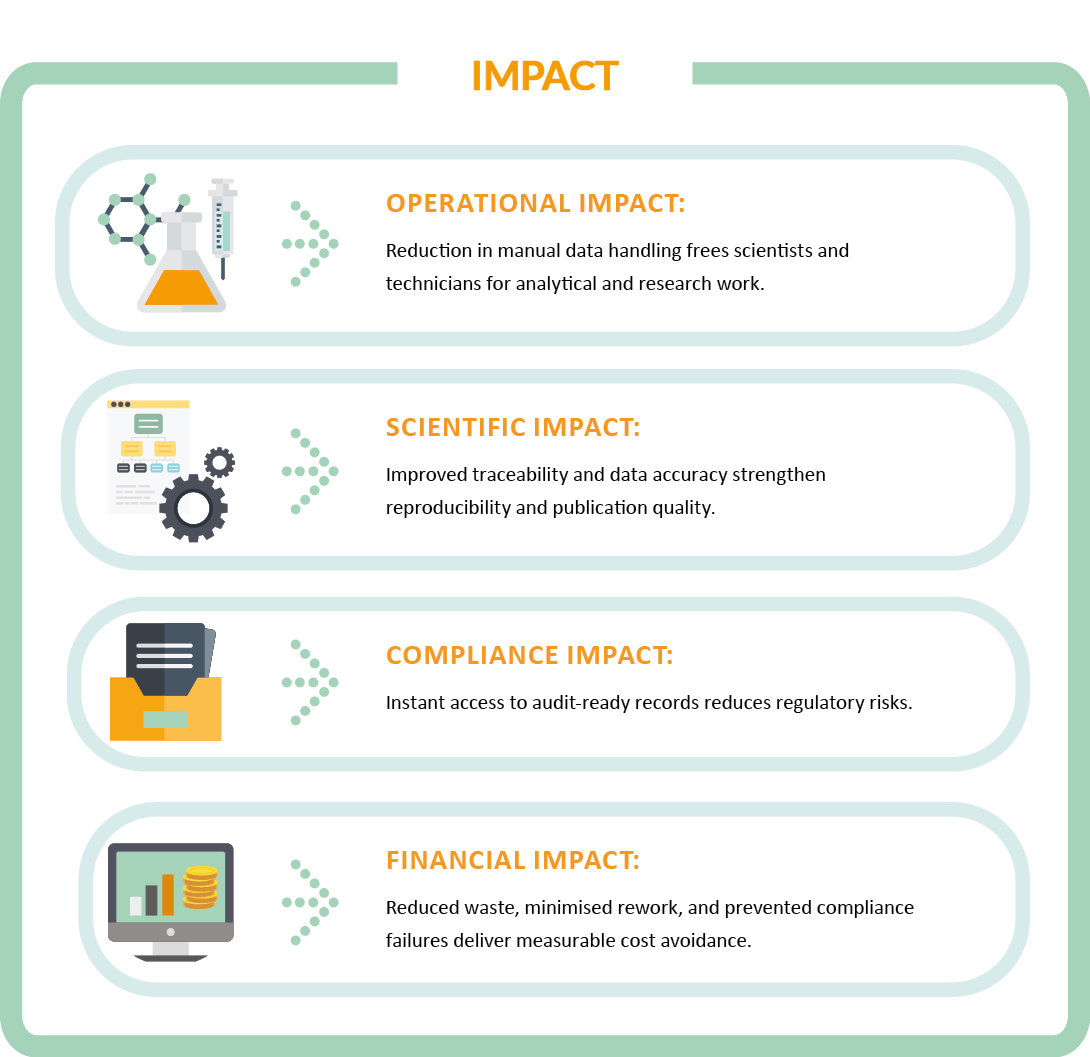
The impact is felt immediately. Teams spend less time on administration and more time doing the scientific work they were hired to do.
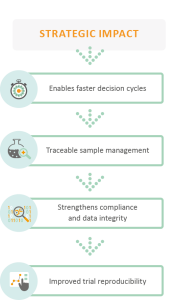
Sample management is another area where the return becomes clear. Anyone who has worked in a busy laboratory knows the familiar moment when someone asks, “Where is that sample?” What follows is usually a quick search through logs, spreadsheets, or email trails. A LIMS removes that uncertainty entirely. Every sample is tracked from the moment it arrives in the lab to the moment results are reported, giving teams complete visibility and confidence in their processes.
But the real magic happens when laboratories start transforming their workflows rather than simply digitising them.
Digitising SOPs to improve consistency and data quality
Instead of referring back to written SOPs and hoping processes are followed consistently, modern LIMS platforms can guide users step by step through each procedure. With solutions such as Achiever LIMS, standard operating procedures can be converted into digital workflows that include validation checks, audit trails, and clear process guidance. The result is greater consistency, improved data quality, and smoother laboratory operations.
And when it comes to compliance, something no regulated laboratory can ignore, the benefits of a LIMS investment become even more compelling. Rather than scrambling to gather records when an audit is announced, laboratories have a complete, traceable history of their data and processes already built into the system. Audit trails, version control, and secure data capture happen automatically in the background. In other words, compliance becomes part of everyday workflow rather than a stressful last-minute exercise.
Building a LIMS ROI business case for adoption
Of course, when proposing any technology investment, leadership teams want to see clear numbers. Building a business case for a LIMS doesn’t need to be complicated. In fact, the most persuasive arguments usually come from metrics laboratories already understand; how long it takes to process samples, how often tests must be repeated due to errors, how much time staff spend managing data, or how quickly results are delivered to customers.
When these factors are examined closely, the LIMS ROI becomes much easier to demonstrate. Increased throughput, reduced administrative workload, improved data accuracy, and faster turnaround times all contribute to measurable operational gains. In many cases, laboratories find that the productivity improvements alone justify the initial LIMS investment.
But perhaps the biggest return is less tangible.
A well-implemented LIMS gives laboratories visibility. Leaders can see what is happening across the lab in real time. Bottlenecks become easier to identify, resources can be allocated more effectively, and teams gain confidence that processes are being followed consistently. Instead of reacting to problems, laboratories can start optimising performance. And that’s when a LIMS stops being just another software system and becomes something much more valuable, a foundation for a smarter, more scalable laboratory.
Next steps: Identify your lab’s hidden savings
If you’re starting to explore what a LIMS could mean for your own lab, the next step is understanding where those hidden savings might lie in your current workflows. Our ROI and Business Case template is designed to help laboratories evaluate inefficiencies, estimate potential productivity gains, and clearly demonstrate the value of a LIMS investment.
Because when laboratories spend less time chasing data, they can spend more time discovering what it means.


Comments are closed.